Quick Look

Food during pregnancy: Australian nutrition and safety

These nutrient-rich foods can help you add variety to your pregnancy diet. If nausea or weight changes are worrying you, ask your doctor or midwife for advice. When you fix your diet, you need to choose the foods that are packed with goodness giving you the right amount of protein, vitamins and minerals, healthy fats and fiber and fluids.   

You may be eating way more than you used to, eating healthier options and trying to maintain the optimal weight; despite all the effort you are probably still not being able to achieve your healthy pregnancy diet mark. You want to eat something but you are being forced to eat something ‘nutritious and good’ for the baby.   

You may find yourself in situations where you think a particular food item is good for you but your friend or relative thinks otherwise, putting you in doubt. Questions like ‘can pregnant women eat yoghurt? Are carrots during pregnancy recommended? Should rice be replaced with oats during pregnancy?’ are very common. Don’t worry, we’re here to tell you which nutrient-dense items you should focus on in order to keep yourself super healthy and give your baby a healthy start to life.  

We have also done the research for you on what to drink during pregnancy. Read through our article on what you should drink during pregnancy to ensure that you remain hydrated

These nutrient-rich foods can help you add variety to your pregnancy diet. If nausea or weight changes are worrying you, ask your doctor or midwife for advice. When you fix your diet, you need to choose the foods that are packed with goodness giving you the right amount of protein, vitamins and minerals, healthy fats and fiber and fluids.   

Here are 11 super nutritious foods to eat when you’re pregnant to help make sure you’re hitting those nutrient goals.

1. Dairy products

When you are pregnant, you will require extra protein and calcium for your growing baby’s needs. Dairy foods and suitable calcium-fortified alternatives can provide calcium and protein. Choose pasteurised milk and yoghurt, and check pregnancy food-safety advice for cheeses.   

Dairy products contain casein and whey which are high-quality proteins. It is also the best source of calcium that enriches the body with Vitamin B, phosphorus, magnesium, and zinc. 

Many of you often ask ‘is yoghurt good for pregnancy?’ Well, yes. Some particular types of yogurt contain probiotic bacteria which is good for digestion. Calcium content varies between products, including Greek yoghurt, so check the label. 

2.Legumes

Legumes is a food group that consists of peanuts, soybeans, lentils, peas, beans and chickpeas. These plant-based foods are a rich source of fiber, protein, iron, folate, and calcium which your body needs in excess during pregnancy. 

These legumes provide dietary folate. Folic acid is the form used in supplements and fortified foods and helps reduce the risk of neural tube defects when taken before and during early pregnancy. The dietary target during pregnancy is 600 micrograms of dietary folate equivalents a day. This is not a folic acid supplement dose; ask your GP or pharmacist which supplement and dose you need.  

”You may be eating way more than you used to, eating healthier options and trying to maintain the optimal weight; despite all the effort you are probably still not being able to achieve your healthy pregnancy diet mark. You want to eat something but you are being forced to eat something ‘nutritious and good’ for the baby.”

3. Sweet potatoes

Sweet potatoes provide beta-carotene, which the body can convert to vitamin A. Vitamin A supports normal vision and immune function.

Sweet potatoes are a plant-based source of beta carotene and fiber. Fiber prevents blood sugar levels from spiking, keeps you full for longer periods and helps in digestion. This also provides relief from pregnancy constipation.  

Sweet potatoes can be enjoyed as baked fries, as a replacement for toast, as baked potato with avocadoes and cheese.  

4. Salmon 

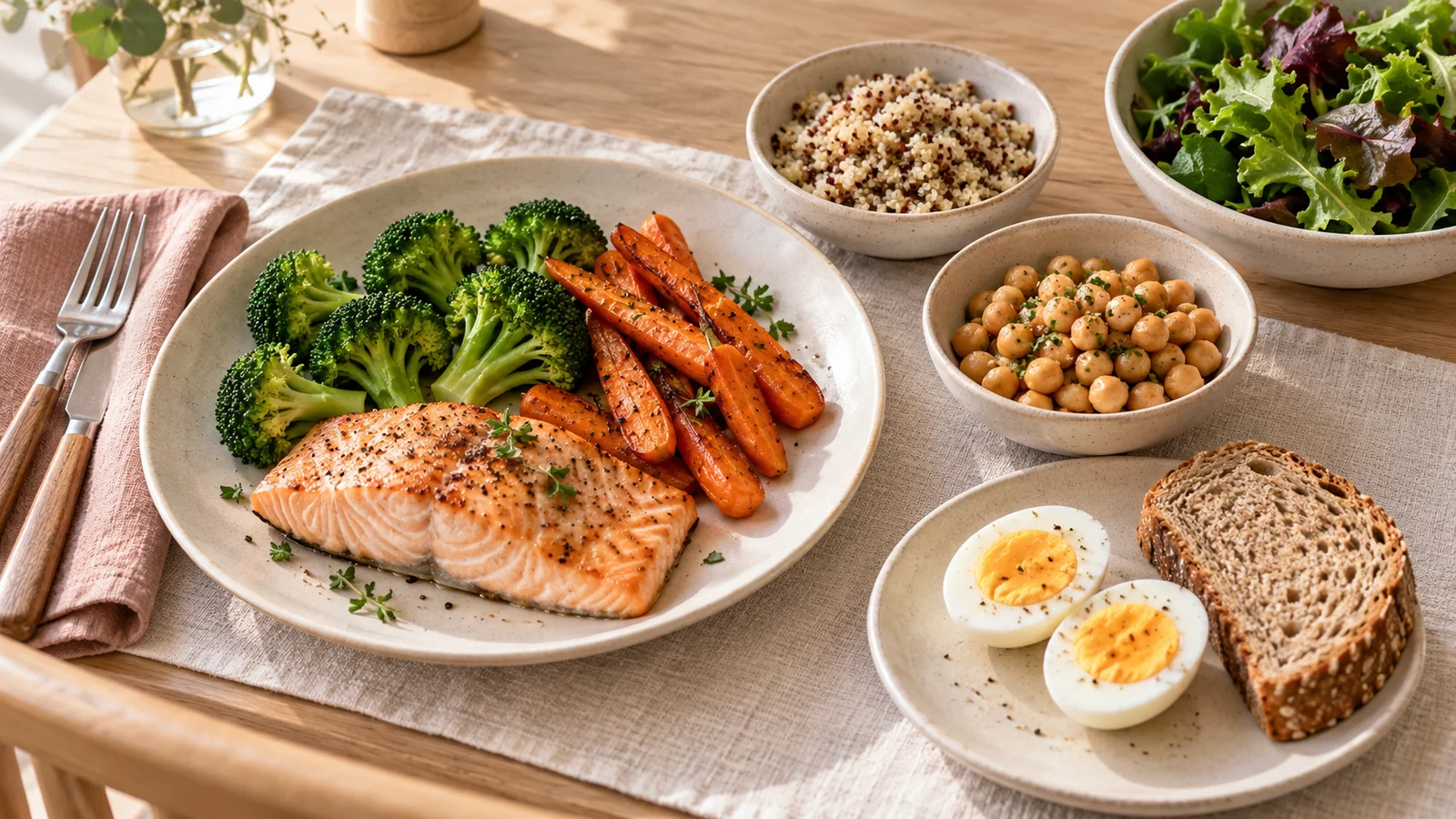
Salmon is a rich source of omega-3 fatty acids and Vitamin D and extremely beneficial. Vitamin D is required for bones and immunity. Omega-3 helps develop the baby’s brain and eyes. 

Even though you are asked not to consume seafood high in mercury, salmon is a lower-mercury choice. Follow Australian advice on fish portions and higher-mercury species, including shark (flake), billfish, orange roughy and catfish.  

Enjoy salmon freshly cooked, such as grilled or baked. Avoid chilled ready-to-eat smoked seafood unless thoroughly reheated until steaming hot.  

5. Eggs

Eggs are a good source of almost every nutrient that the body needs. Apart from being one of the most versatile foods, a large egg contains high-quality protein, fat, and vitamins and minerals. 

Eggs provide choline, a nutrient used in cell membranes and normal nervous-system function. The Australian adequate intake for pregnant adults is 440 mg a day.  

Be it a scramble or a frittata, cook eggs thoroughly and avoid raw or partly cooked egg dishes during pregnancy. 

6. Dark green vegetables

Green vegetables, such as broccoli, kale and spinach, are nutrient-packed pregnancy superfoods. These iron rich foods for pregnancy are also a great source of fiber, folate, vitamin C, vitamin K, vitamin A, calcium and potassium. 

Including these vegetables in your daily diet adds fibre, which can help with constipation.

Tossing leafy vegetables into eggs, or blanching them as a side with chicken or blending it into a smoothie are some of the interesting ways to consume these leaves.  

7. Lean meat

The Amino acids in protein are responsible for the growth of every cell in both your body and your baby’s body. Lean meats like lean beef and lean pork are great sources of high-quality protein, iron, choline, and other B vitamins, all of which are required in higher amounts by a pregnant woman. 

If you are a meat eater, you are playing a role in providing iron to your body. Iron is important to prevent anemia during pregnancy and enable the baby’s brain development.  

If you can pair foods such as oranges and lemons that are rich in vitamin C, with iron-rich foods it will help increase the absorption. 

Healthy recipes for pregnancy that involve the use of lean meat are available in abundance on the internet. Most of us have grown up eating meat in every meal, just make sure that what you choose is lean and pair it with Vitamin -C rich foods like tomatoes and bell peppers and you have a meal to go.  

Read the Australian nutrient reference values for vitamin A and choline.

8. Berries

Berries are little packages of goodness that contain antioxidants, water, healthy carbs, fiber and vitamin C.   

They act as great snack as they are flavorful, nutritious and not high in calories.  

You can have strawberries, goji berries, blueberries, raspberries and acai berries in the form of smoothies or when you mix it with Greek yoghurt as a parfait.  

9. Quinoa and other whole grains

Unlike refined flour, whole grains are a great source of fiber, vitamins, and plant compounds. When we talk about whole grains, we mean replacing white products like bread, rice and pasta with oats, quinoa, brown rice and barley.  

As for quinoa, it is a pregnancy superfood as one cup when cooked provides 8 gms of protein, 5 gms fiber and some iron along with small amounts of zinc, calcium, magnesium and potassium.  

There are plenty of ways to add whole grains to your meals. Quinoa for instance cooks in under 20 minutes and can be a substitute for rice or had as porridge.  

10. Avocados

Is avocado good for pregnancy? The answer is Yes. Avocados are a high source in fiber, folate, Vitamin C, vitamin K, potassium, copper and vitamin E. Due to their high content of healthy fats, folate, and potassium, avocados are a great choice during pregnancy (and always). 

The healthy fats keep you full for longer periods of time and also build the skin, brain, and tissues of the baby. Avocadoes contain more potassium than even bananas . 

Its creamy and buttery texture makes it a substitute for cheese and mayo. It can be added to your salad, on a toast or even in a smoothie.  

11. Dried fruit

Dried fruit such as figs, prunes, dates and dried apricots are high in calories, fiber, and many vitamins and minerals such as potassium and iron.  

Dried fruit helps with your calorie and nutrient intake and is not recommended to be consumed in large quantities.   

Apart from all the superfoods one thing that one must have in abundance is water. It plays a very critical role during pregnancy as blood volume increases by 45%. It is necessary to remain hydrated for yourself and the baby.  

Dehydration can cause anxiety, fatigue, migraines and an irritable mood. Drinking enough fluid supports hydration and can help with constipation. If you think you have a urinary tract infection, seek medical advice.  Read through our article on what you should drink during pregnancy to ensure that you remain hydrated and are not drinking the wrong drinks.

During your pregnancy, if you do feel that your nutrients intake is not up to the mark or you are experiencing certain symptoms caused due to lack of particular nutrients, it is best to consult your doctor and take corrective action. Till then eat healthy, drink healthy and stay healthy!! 

Check the NSW Food Authority pregnancy food-safety advice, FSANZ guidance on mercury in fish and Australian dietary folate reference values.

Share

Latest Articles

Scroll to Top