
Search

First trimester pregnancy in Australia
THE FIRST TRIMESTER
First appointments, everyday support and space to find your feet.
One step at a time
A positive test can bring excitement, uncertainty or a whole mix of feelings. You might be ready to tell everyone, or still finding words for the news. There is no perfect way to feel, and you do not need to organise the entire pregnancy today.
Start with the things that make the next few weeks easier: arranging care, understanding your options and getting help with symptoms. Pregnancy weeks are usually counted from the first day of your last period; your doctor or midwife can help confirm how far along you are. Working out your due date.
Reading for the early weeks


Help with morning sickness
Pregnancy, Birth and Baby guidance on symptoms, treatment and seeking help.

Cravings and food aversions
Explore changing food preferences, practical food-safety questions and when to ask your care team for support.
Your baby and body: weeks 1–12
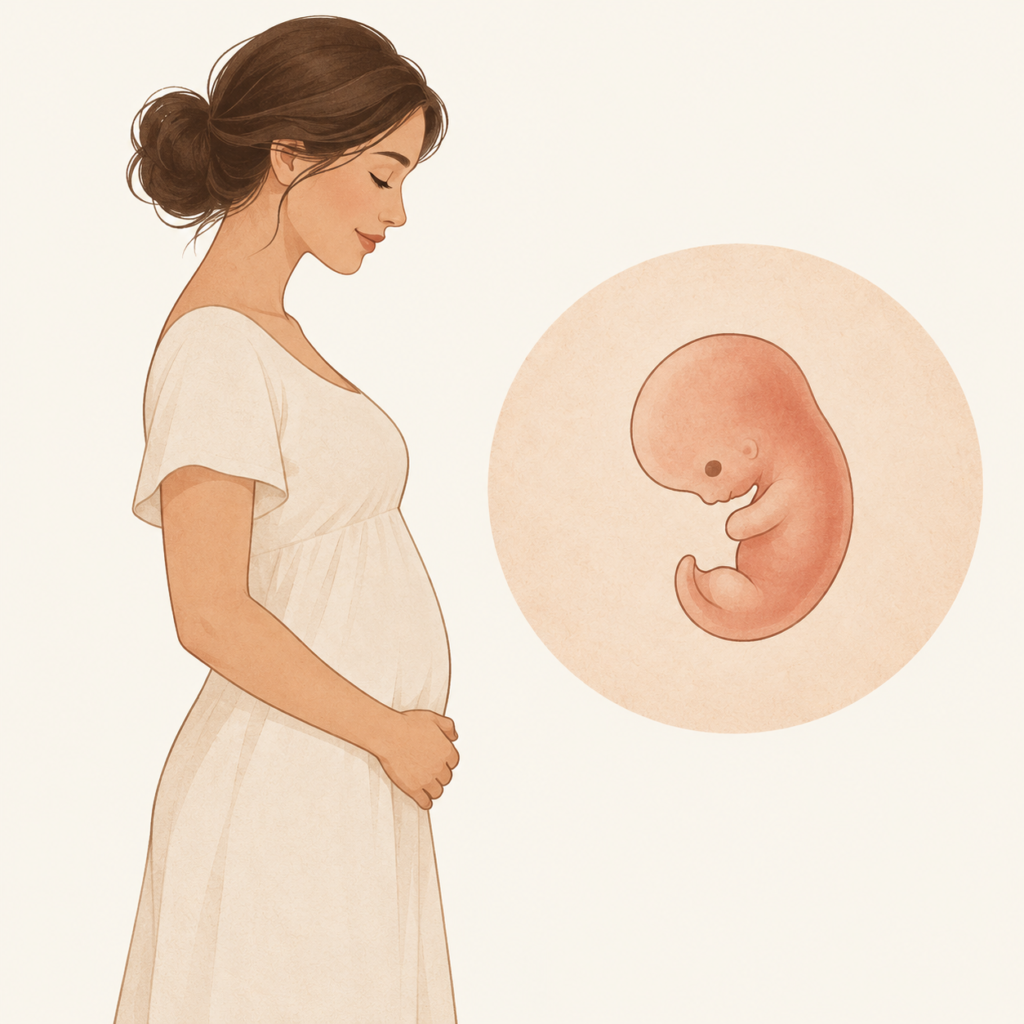
Your baby: After fertilisation, the early embryo travels to the uterus and implants in its lining. During weeks 5–8, the brain, spinal cord and major organs begin developing, and tiny limb buds appear. By weeks 9–12, body structures become more recognisable. Growth and maturation continue; structures forming does not mean readiness for life outside the uterus.
Your body: Hormonal changes can bring tender or fuller breasts, tiredness, nausea, food aversions and more frequent trips to the toilet. Morning sickness can happen at any time. Some people have several symptoms; others notice very few. Every pregnancy is different. Care focus: book early antenatal care and ask about screening, medicines and supplements.
Sources: conception and fetal development; early signs of pregnancy.
Start with your first pregnancy appointment
Book an appointment with your GP or chosen maternity care provider. Early care can include a conversation about your health history, blood and urine tests, ultrasound options and screening choices. Ask which steps need booking now and which can wait. First trimester care.
Arrange your first pregnancy appointment early, ideally within the first 10 weeks. Bring a list of medicines and supplements, previous pregnancy records and your questions. Your clinician can discuss your health history and emotional wellbeing, check blood pressure and offer blood and urine tests. Raise practical concerns such as costs, travel, interpreting support or fitting care around work.
Before you leave, make sure you know who is coordinating your care, how results will reach you and whom to contact between appointments. If you have not decided where to give birth, ask about local care pathways.
Screening choices: Ask early about time-sensitive options. NIPT is available from around 10 weeks. If you choose combined first-trimester screening, its ultrasound is usually performed at 11 to 13 weeks and 6 days. Screening estimates the chance of certain conditions; it is not a diagnostic test. Screening is your choice. Ask about limitations, possible follow-up and out-of-pocket costs.

Understand symptoms without comparing pregnancies
Tiredness, sore breasts, appetite changes and needing to wee more often can happen early on. Some people notice lots of changes; others feel much as they usually do. Your experience does not need to match a friend’s pregnancy or an online checklist. Read about the first trimester.
Keep a short record of symptoms that bother you: when they happen, how long they last and whether they affect eating, drinking, sleeping or working. This gives your care provider something more useful than trying to remember everything on the spot.
Get support for nausea
Morning sickness can happen at any time. Smaller, more frequent meals may help, but you do not need to keep trying home remedies while you feel increasingly unwell. Speak with your doctor or midwife if nausea disrupts daily life. If you are vomiting and cannot keep fluids down, see a doctor immediately. Very dark urine or weight loss also needs prompt medical advice. Australian morning sickness guidance.
On difficult days, practical help matters. You could ask someone else to prepare food, take over a school run or handle a task you would normally do. Needing support is not a failure to cope.
Check supplements and medicines early
Ask a pharmacist, GP or midwife which supplements and doses suit you, especially if you have a medical condition or already take a multivitamin. Australian pregnancy guidance covers folic acid, iodine and vitamin D; your circumstances matter when choosing products. More supplements do not automatically mean better care. Vitamins and supplements.
Have regular medicines checked, including over-the-counter and herbal products, rather than changing treatment on your own. Your clinician or pharmacist can explain the benefits and risks for your situation. Medicines during pregnancy.
Make room for questions and feelings
You can be grateful to be pregnant and still find it hard. Tell your care provider if worry or low mood is making everyday life difficult. You do not have to wait until the next stage to ask for support.
For your next appointment, ask: What are my local care options? Which tests are offered, what can they tell me and what do they cost? Who should I call if symptoms change? Does anything in my health history change my care plan?
Know when to seek help
Contact your doctor or midwife straight away about vaginal bleeding, spotting or abdominal pain. Bleeding does not always mean pregnancy loss, but it should be assessed. Shoulder-tip pain or feeling faint also needs urgent assessment, especially with bleeding or abdominal pain. Heavy bleeding, strong pain or feeling very unwell needs emergency help: call 000. Do not use a symptom list to diagnose yourself or wait for an online answer. Bleeding during pregnancy.
For now, a useful next step is simple: book your appointment and write down the three questions you most want answered. The rest can be taken one conversation at a time.
This is general information, not personalised medical advice. Your maternity care team can guide decisions about your pregnancy.
An Australian journal for pregnancy, baby and motherhood.
YOUR CHAPTER
PREGGY LOVE
© Preggy Love. All rights reserved.