Baby swaddling: Australian safety and fabric-wrap guide
Swaddling means wrapping a young baby in a blanket and may help them settle. It is optional and does not replace safe sleep practices. A wrap should stay secure without restricting breathing, leave room for the hips and knees to bend and move, and keep the head and face uncovered.
Follow Pregnancy, Birth and Baby’s swaddling advice and the stopping guidance below. The earlier arm-restraining product recommendations remain withdrawn. This guide includes one plain fabric-wrap example, without a claim that the product has been clinically tested or approved by a safety organisation.
Affiliate disclosure: As an Amazon Associate I earn from qualifying purchases. This article contains affiliate links.
When to stop swaddling
Wrapping may help a young baby settle, but it is not a substitute for safe sleep practices. Always place baby on their back. Stop swaddling as soon as your baby shows signs of trying to roll. Red Nose’s dedicated guidance recommends stopping wrapping for sleep by three months, or earlier if rolling signs appear.
Choose wrapping that allows healthy movement. Australian guidance advises against wraps with Velcro or zips that specifically restrain the baby’s arms. This is not a claim that every zip-front garment or every arms-free sleeping bag is unsafe. See Red Nose Safe Wrapping for Parents and when to stop wrapping.
Blankets and sleeping bags
A blanket used for wrapping must stay secure without restricting breathing or hip movement, and must not cover the head or face. A product that fastens the arms into a wrap is different from an arms-free sleeping bag. The four inherited arm-in product recommendations have been withdrawn while their exact designs and use are reviewed; no named model has been tested in this review.
Choose lightweight material and adjust clothing for the room temperature; fabric described as breathable does not remove the risk of overheating. See Red Nose guidance on dressing baby for sleep. Red Nose recommends the baby’s own sleep space in the caregiver’s room for the first six months: six safe sleep recommendations.
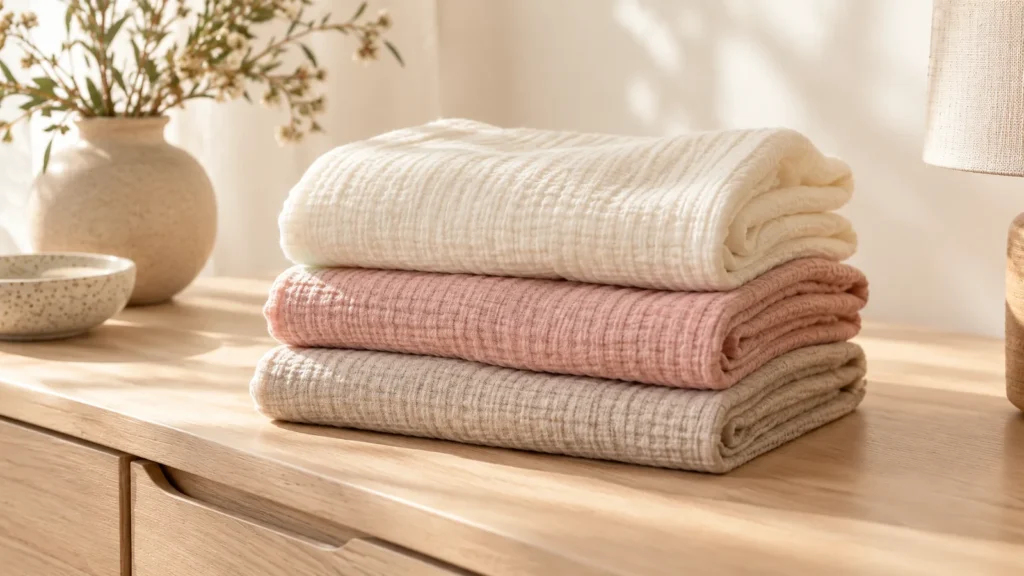
Bubba Blue Organic Cotton Muslin Wraps, Chestnut, three-pack

This Bubba Blue pack contains three Chestnut-print cotton muslin wraps. The current offer is sold and dispatched by Amazon AU. These are fabric blankets, not fitted arm-restraining zip or Velcro garments.
Before using a fabric wrap
Read the pack’s dimensions, fabric and washing instructions before use. Its name, size or advertised age range does not override the stopping advice above. Stop swaddling at the first signs of trying to roll; Red Nose’s dedicated guidance also recommends stopping wrapping for sleep by three months if those signs have not appeared earlier.
Fabric described as breathable does not remove the risk of overheating. Keep the head and face uncovered and allow hip and knee movement. After swaddling ends, a blanket’s other uses must still be age-appropriate; do not leave it loose in your baby’s sleep space or use it to cover a pram.
Share
Facebook · X · LinkedIn · WhatsApp
Latest Articles
- How to ask for practical support after birth
 Simple ways to ask for help with meals, laundry and visitors, with practical scripts for the first weeks after birth.
- How to prepare for a preconception appointment
 Make a simple health summary, choose questions for your GP and leave with clear next steps before trying for a baby.
- Postpartum underwear: Australian fit and buying guideCompare postpartum underwear fit, fabrics and reusable or disposable options, with practical reminders to discuss recovery needs with your care team.
- Maternity support belts: Australian buying and fit guideCompare maternity support belt designs, fit and care, with Australian guidance on pregnancy pain and when to seek individual advice.
- Baby swaddling: Australian safety and fabric-wrap guideAustralian swaddling advice on hip movement, overheating and rolling signs, with Red Nose’s dedicated stopping guidance and one plain fabric-wrap example.
- Nipple shields: Australian fit and buying guideNipple shields need individual assessment and fit checks. Seek lactation support and monitor feeding and growth; a shield does not guarantee milk intake.